

The Green Ripple: How 14 Leaders are Reimagining Malawian Farming
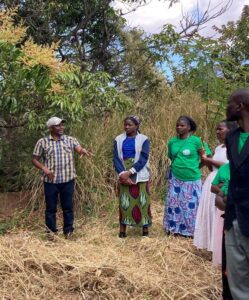
In the heart of Dowa, the landscape of traditional agriculture begin to shift. In August, 2025, a delegation from the Rhema Institute for Development visited Tikondwe Freedom Farm, not just as visitors, but as students of a sustainable revolution.
The group, comprised of 12 village agents and two coordinating officers, embarked on an intensive educational exchange designed to dismantle old habits and replace them with the resilient principles of agroecology and permaculture. These agents, who serve as the primary lead farmers and “beacons of progress” in their home communities, were selected to lead a change that is as much about mindset as it is about soil.
Redefining the “Common Sense” of Farming
The day began in a spirit of reflection. Following an opening prayer and welcoming remarks, the focus shifted to the core philosophy of the land. According to representatives from the Rhema Institute, the primary objective was clear: to move beyond the high-cost, chemical-dependent methods that have long dominated rural farming.
The lead trainer at Tikondwe provided a comprehensive overview of permaculture, defining it as a system that works with nature rather than against it. “Conventional farming often treats the soil as a bank account we only withdraw from,” the trainer emphasized during the session, noting that agroecology is the “investment strategy” needed to ensure the bank never runs dry.
The “Gold” in the Waste
Transitioning from theory to the dirt, the participants were immersed in practical demonstrations that turned the concept of “waste” on its head. The curriculum at Tikondwe specializes in practices that are both environmentally restorative and financially accessible for the smallholder farmer.
Participants were shown how to:
- Capture the Sky: Developing water harvesting systems designed to sustain crops through the unpredictable dry spells that often devastate local harvests.
- Compost the Forest: Learning the art of gathering leaf litter to create rich, organic manure.
- The Science of Urine: In one of the more revolutionary segments, the trainer demonstrated how to harness both animal and human urine to create potent, nitrogen-rich manure—a low-to-zero-cost alternative to synthetic fertilizers.
Building Resilience into the Soil
The training concluded with a masterclass in physical land management. Officers and agents worked side-by-side to learn the construction of specialized ridges. As noted during the demonstration, these ridges serve a dual purpose: they act as sponges to retain vital moisture while simultaneously acting as shields, protecting the precious topsoil from the ravages of erosion.
A Future Rooted in Knowledge
The impact of this trip is expected to ripple far beyond the borders of Dowa. By equipping these 12 village agents with high-level permaculture skills, Rhema Institute for Development created a “train-the-trainer” ecosystem.
As the group departed Tikondwe Freedom Farm, the sentiment among the officers was one of renewed mission. These agents return to their villages not just as farmers, but as educators and innovators, ready to transform their communities—one ridge and one organic compost pile at a time.
#RhemaInstitute #TikondweFreedomFarm #SustainableMalawi #AgroecologyInAction #PermacultureAfrica #RegenerativeAgriculture #SoilHealth #WaterHarvesting #OrganicManure #LeadFarmers #ClimateResilience #ZeroWasteFarming #SmallholderSuccess