


Rhema Institute for Development(RHID)

Loading

About us
Rhema Institute for Development (RHID) is a local non-profit organization that serves the poor,
Mission statement
We exist to reduce poverty and mitigate the impact of HIV/AIDS and provide care and
Vision
A healthy and morally upright community that is spiritually and socio-economically empowered,
Values
We serve the vulnerable and marginalized communities with love,
Integrity,
0Years Experience
About Our OrganizationAbout Our OrganizationAbout Our Organization

Serving the vulnerable & marginalised poor communities

Rhema Institute for Development (RHID) is a local non-profit organization that has the mandate to serve the poor, vulnerable and marginalized communities worldwide. Rhema is founded on the word of God that

  • Love
  • Excellence
  • Forgiveness
  • Commitment
  • Responsibility
Establishment of Rhema

Rhema was established in 2005 as a locally based Non Governmental Organization and its initial
project focused on the Youth in regard to HIV/AIDS prevention.

Rhema's Overview

Rhema uses an integrated approach which has a wider and broader coverage of livelihood interventions
which include projects covering thematic areas of Microfinance (VSLAs

Rhema's Approach

Teamwork and community based participatory methodologies; Collaboration/networking; rural
communities’ empowerment and Integrated community development

What We’re OfferingWhat We’re OfferingWhat We’re Offering

Geographical Scope where Rhema has its presence: Services

Rhema is currently operating in the following two districts in Malawi and may possibly expand to another third district in Kasungu where it has developed a network of CBOs as its partners. (a) Lilongwe (b) Dowa

What’s HappeningWhat’s HappeningWhat’s Happening

Catch up with latests news and projects By Rhema

Rhema Institute of Development in news and details

Empowering the Heart of the Home: Transforming Child Nutrition in Ntchenenje Village

Women preparing flour for nutritious porridge to support children’s growth, health, and development

In the quiet village of Ntchenenje, a quiet revolution is taking place—one centered not on high-tech machinery, but on the simple, life-sustaining power of a bowl of porridge.

In July, 2025, Rhema Institute for Development launched a critical nutrition training initiative. The goal was to bridge the gap between local agricultural resources and household health. By the end of the day, eleven women had not only gained a recipe but had also claimed a new role as the primary architects of their community’s health.

The Hidden Challenge of Early Childhood Nutrition

For families living in rural areas, the first five years of a child’s life are the most formative. During this window, proper nutrition is the difference between a child reaching their full potential or facing the lifelong hurdles of stunting and malnutrition.

However, many households face a dual challenge: the rising cost of commercial “health foods” and a lack of practical information on how to balance diet using what they already grow. Rhema Institute recognized that the solution wasn’t in imported supplements, but in empowering local women with indigenous knowledge and accessible ingredients.

From Field to Bowl: The Science of “Super-Porridge”

The training session was designed to be deeply practical. Moving away from traditional lectures, the eleven participants gathered for a hands-on demonstration. Together, they prepared a high-nutrient porridge formulated from five accessible pillars:

  • Maize & Soybean: Providing the essential carbohydrates for energy and high-quality protein for growth.
  • Oil: Adding much-needed caloric density to support brain development.
  • Sugar & Salt: Carefully balanced to provide minerals and palatability.

The “Interactive Kitchen” format allowed the women to discuss the nutritional value of each ingredient. They explored how soybean—often a cash crop—could be better utilized at home to fortify their children’s diets, turning a staple crop into a life-saving resource.

Real Impact: Saving Lives While Saving Income

The impact of this training is two-fold: biological and economic. By mastering the preparation of affordable, nutritious meals, these mothers are now equipped to improve the growth and well-being of their children under five without relying on expensive, store-bought alternatives.

One participant reflected on the newfound independence the training provided:

“We used to think that ‘good’ nutrition was something you had to buy from a shop. Now we know we can make nutritious porridge at home for our children. We are saving money while ensuring they grow up healthy and strong.”

Strengthening Household Food Security

This session in Ntchenenje Village is a microcosm of Rhema Institute’s broader mission. By focusing on the “Under-Five” demographic, the program addresses food security at its most vulnerable point. When mothers are empowered with knowledge, the benefits ripple outward—healthier children lead to more resilient households, which eventually leads to a more vibrant, productive community.

As these eleven women returned to their daily lives, they carried with them more than just recipes; they took the tools for sustainable change.

Rhema Institute for Development remains committed to monitoring the progress in Ntchenenje, ensuring that the seeds of knowledge planted this July grow into a future where no child is left behind due to malnutrition.
Sowing Seeds of Resilience: How Ntchenenje’s Lead Farmers are Greening the Future


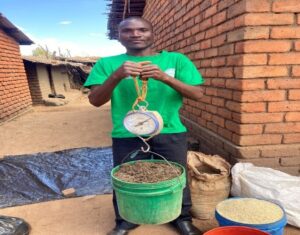
a farmer weighing materials for manure preparation, a step towards improving soil fertility and boosting crop yields

In the face of a changing climate and rising costs of chemical fertilizers, farmers of Ntchenenje Village in Dowa, Malawi are turning back to the earth—armed with new science and ancient wisdom.

On July 30, 2025, Rhema Institute for Development hosted a transformative Lead Farmer training session. The goal was more than just teaching new techniques; it was about cultivating a movement of agricultural leaders capable of revitalizing their soil and their local economy simultaneously.

The Shift to Agroecology: Why It Matters Now

Traditional farming in many regions has become a cycle of high costs and depleting yields. Agroecology offers a different path. By focusing on the relationship between plants, soil, and the environment, farmers can increase productivity without the heavy financial burden of synthetic inputs.

For the fifteen participants—an inspiring group composed of fourteen women and one man—this training represented a shift toward independence. By learning to work with nature rather than against it, they are securing a future where their land remains fertile for generations to come.

A Classroom Without Walls: The Tikondwe Freedom Farm Experience

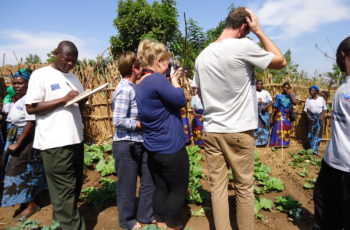
The training went beyond the theoretical, taking participants on a field visit to the renowned Tikondwe Freedom Farm. Often described as a “living laboratory,” Tikondwe provided a powerful visual of what success looks like.

Participants observed first-hand the impact of:

  • Organic Manure Production: Turning waste into “black gold” to naturally enrich the soil.
  • Soil Conservation Methods: Techniques designed to retain moisture and prevent the erosion that often plagues rural hillsides.
  • Sustainable Crop Management: Strategic planting that naturally manages pests and maximizes yield per acre.

Seeing these methods in action at Tikondwe wasn’t just educational; it was motivational. “Seeing is believing,” noted one participant. “We saw that we don’t need expensive chemicals to have a lush, productive garden. We have the tools right here in our village.”

Empowering Women as Agricultural Leaders

A standout feature of this initiative is the overwhelming participation of women. In Ntchenenje, women are the backbone of the household, yet they often lack access to formal agricultural training.

By targeting women as Lead Farmers, the Rhema Institute is ensuring that knowledge stays in the heart of the community. The participants reported a significant boost in confidence, eager to apply these techniques to improve their household food security and generate much-needed surplus income.

The Ripple Effect: Strengthening Local Networks

The training didn’t end when the sun went down. These fifteen participants are now “Lead Farmers,” tasked with a vital mission: peer-to-peer learning. By sharing their new skills with neighbors, they are creating a resilient agricultural network. This community-led approach ensures that sustainable practices aren’t just a one-time event, but a long-term cultural shift in how Ntchenenje feeds itself.

At Rhema Institute for Development, we believe that true empowerment comes from self-reliance. By equipping Ntchenenje’s farmers with agroecological skills, we aren’t just helping them grow crops—we are helping them grow a more sustainable, food-secure, and prosperous future.
 

Job Opportunities Open At RHID

📢 Re-Advertisement: Join Our Team for Development 📢

Rhema Institute for Development invites qualified and passionate individuals to apply for the following key positions:

  • Monitoring and Evaluation Officer
  • Project Officers
  • Administrative and Human Resource Officer
  • Internal Auditor
  • Community Development Officer

👉 Note: Applicants who have already submitted their applications do not need to re-apply.

📧 Submit your application via email to:

rhemainstituted@yahoo.com

or

innocentsemu77@rhemamw.org

⏳ Application Deadline: Friday, March 20, 2026.

Together, let’s build a future of impact and transformation.