

Breaking New Ground: How Rhema Institute is Cultivating a Farming Revolution in Dowa
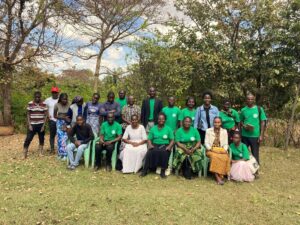
In a nation where 22% of the population still faces acute food insecurity, a quiet revolution is taking root in the fertile soils of the Central Region. On August 19, 2025, the Rhema Institute for Development (RHID)—a veteran NGO with two decades of service in poverty reduction—orchestrated a pivotal educational field day that could redefine the agricultural future of dozens of Malawian villages.
A delegation of 14, comprising 12 village agents and two project officers, descended upon the legendary Tikondwe Freedom Farm in Dowa. Their mission? To unlearn decades of dependency on expensive, synthetic inputs and embrace the “waste-to-wealth” philosophy of agroecology.
The village agents in attendance are more than just farmers; they are the strategic “role models” of the RHID mission. Handpicked from their communities, these leaders are tasked with a heavy burden: proving that productivity can rise while costs fall.
The day’s curriculum at Tikondwe—a 12-hectare model of sustainability founded by the late Dr. Glyvyns Chinkhuntha—focused on the radical idea that everything needed for a bountiful harvest already exists within the farmer’s reach.
The training opened not with a lecture, but with a philosophy. Representatives from Rhema Institute and the Tikondwe training team emphasized that conventional farming often acts as a “withdrawal” from the land, whereas permaculture is a “long-term investment.”
Under the guidance of Daniel Chinkhuntha, who continues his father’s legacy of “Farming in God’s Way,” the village agents were thrust into the practical realities of regenerative agriculture.
“The aim was to inspire a fundamental change in their approach,” an RHID officer noted. “We are moving away from the high costs that cripple smallholders and toward systems that harmonize with the environment.”
The most captivating segments of the day challenged long-standing cultural taboos. While most farmers discard organic debris, the agents were shown how to gather fallen leaves to create nutrient-dense compost.
Even more transformative was the session on urine-based manure. Participants learned to process both animal and human urine into a potent, nitrogen-rich liquid fertilizer—a technology that studies show contains up to 88% of the total nitrogen found in human waste, providing a zero-cost alternative to synthetic urea.
As erratic weather patterns continue to disrupt traditional farming calendars across Malawi, water management took center stage. The agents engaged in building:
Water Harvesting Systems: Designed to trap and store moisture for the increasingly frequent dry spells. Contour Ridges: Strategic soil engineering that prevents topsoil erosion while recharging underground aquifers.
The success of this visit is measured not in the hours spent in Dowa, but in the lessons carried back to the villages. These 12 agents have now returned to their communities as certified “catalysts for change.”
By bridging the gap between innovative research and rural practice, Rhema Institute for Development and Tikondwe Freedom Farm are doing more than just planting crops—they are planting the seeds of food sovereignty. As these lead farmers begin to train their neighbors, the “Green Ripple” of Dowa promises to turn the tide against food insecurity, one organic ridge at a time.
#SustainableMalawi #Agroecology #FoodSecurity #RhemaInstitute #TikondweFreedomFarm #Permaculture #LeadFarmers #MalawiAgriculture